Software testing is no longer a quick check at the end of a release. Today, many teams start testing much earlier. Testers help shape product choices, spot risks, and protect users before problems reach them.
That is one reason many people look into ISTQB certification when they want to start a career in software testing or grow in QA. Still, the ISTQB path might look confusing at first.
Is ISTQB a good choice for beginners?
What comes after Foundation Level?
Do you need ISTQB for test automation, agile testing, AI testing, or test management?
This guide explains what ISTQB is, who it is for, and how to choose the right software testing certification path for your goals. For the full list of ISTQB certifications and course options, visit the ISTQB board page on BilduX.
What Is ISTQB?
ISTQB stands for International Software Testing Qualifications Board.
It is a global certification program for software testing. It helps you learn common testing terms, testing methods, test processes, and key ideas about software quality.
Many people who work in software testing and QA take ISTQB exams. Software developers, product teams, business analysts, project teams, and test managers also use ISTQB to build a shared understanding of testing.
A common first step is the ISTQB Certified Tester Foundation Level, often called CTFL. This exam gives you a strong base in software testing and prepares you for the next levels in the ISTQB path.
ISTQB is not only for manual testers. It is also useful for people who work with test automation, agile teams, software quality, acceptance testing, security testing, AI testing, and test leadership.
Who Is ISTQB Certification For?
ISTQB certification is not only for one type of person. Some people take it at the start of their testing career. Others use it when they move from another role into QA. Some already work in testing and want a clearer path forward.
Beginners in Software Testing
If you are new to software testing, the ISTQB Foundation Level is the first place to start.
You learn the basic words and ideas testers use at work. Test levels. Test types. Defect reports. Test planning. Test techniques. The software development life cycle. All the things people mention in QA meetings, tickets, and reports.
This base matters. Without a structure, testing feels confusing at first. With a structure, you start to see how the work fits together before you move into daily QA tasks.
Career Changers
ISTQB also works well for people who come from another field.
You might have worked in customer support, product, business analysis, or software development. In these roles, you already know how software teams work. The Foundation Level helps you add testing knowledge to that experience.
A certificate will not get you hired by itself. But it gives you something useful to show. You understand the basics. You know the language. You have taken the time to learn how testers think.
Experienced Testers and QA Engineers
ISTQB is not only a beginner certificate.
If you already work as a tester or QA engineer, the next levels help you move into a more focused area. After Foundation Level, many testers go into Advanced Level or Specialist certifications.
These paths cover test analysis, test management, technical testing, test automation, agile testing, AI testing, security testing, performance testing, and other areas.
This matters more when your job grows beyond running test cases. You might plan test work, look at risks, build a test strategy, talk with developers and product people, or help the team decide whether a release is ready.
Developers, Product Teams, and Business Analysts
Testing knowledge also helps people outside QA.
Developers write and read bug reports every week. A shared testing language makes those talks easier. Product owners and business analysts also benefit because requirements, acceptance criteria, and test coverage are closely connected.
Project managers and quality managers gain from the basics too. They need to read test reports, understand risk, and make release decisions without feeling lost in QA terms.
Is ISTQB Certification Worth It?
ISTQB certification is worth it when you have a clear reason for taking it.
For example, it makes sense if you want to start a career in software testing, apply for QA jobs, or learn the common language testers use at work. It also helps if you want to move into a more specific testing role later.
Many employers know the ISTQB name. You will often see it in job ads for QA and software testing roles, especially in companies with a more structured testing process.
Still, the certificate is only one part of the picture.
ISTQB shows you understand testing ideas. It does not prove you are ready to test every product well in real life. Good testers also need practice. They need to write clear bug reports, use testing tools, talk well with developers and product teams, and think about the product from the user’s side.
For test automation jobs, you also need coding skills and tool knowledge. For agile teams, you need to understand teamwork, feedback, and fast release cycles. For security testing or AI testing, you need deeper knowledge in those areas.
So yes, ISTQB is worth it when it fits your next step.
It works best as part of a plan. Use it to support your career move, not as the only thing you rely on.
How the ISTQB Certification Path Works
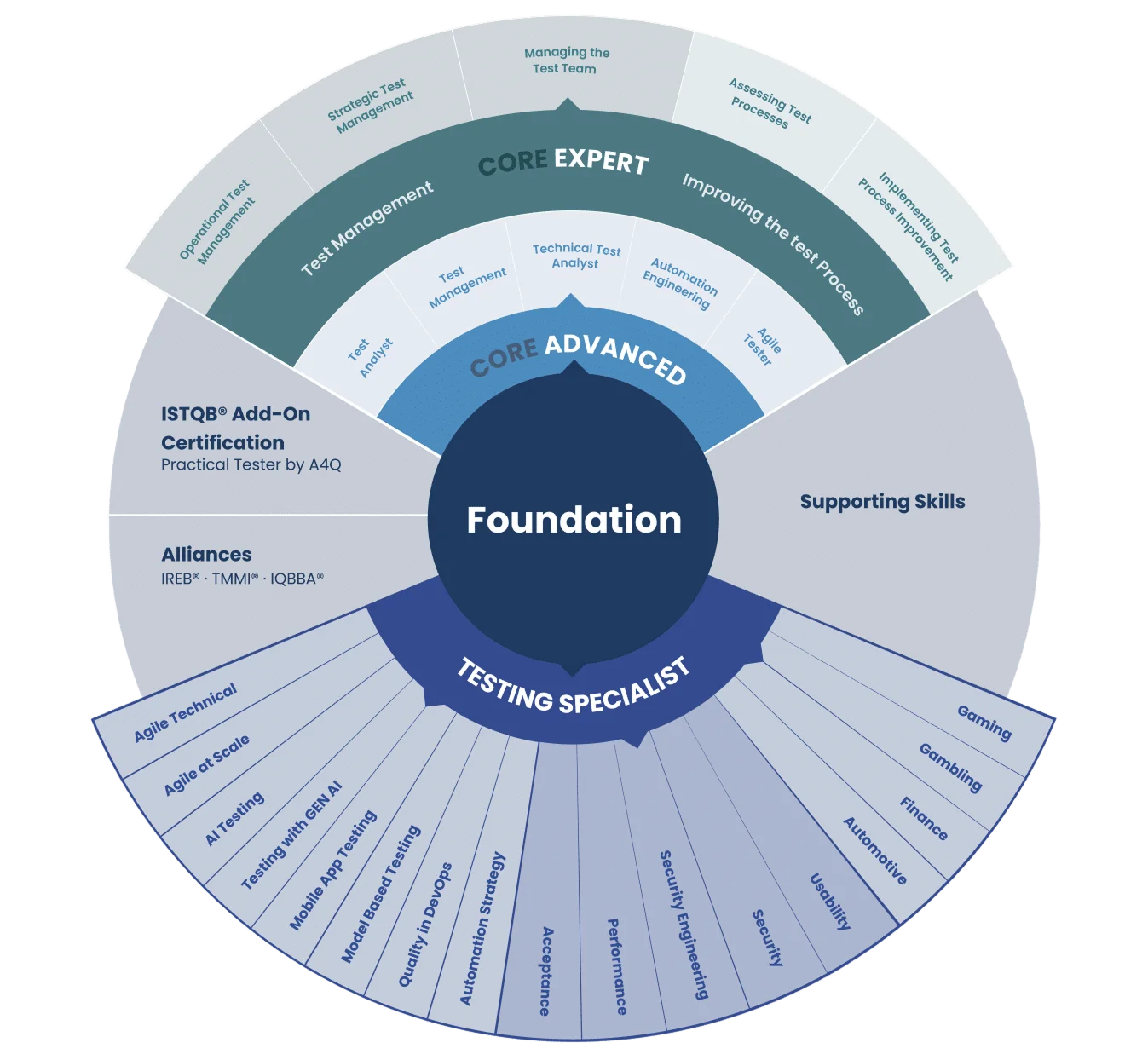
The ISTQB path is not a checklist you have to finish from top to bottom. Most people only need the certificates linked to their job, their experience, or the role they want next.
So the better way to look at it is simple. Start with your goal, then pick the level which helps you move in that direction.
1- Foundation Level
Learners start with the Foundation Level.
It gives you the base of software testing. You learn the terms, ideas, and simple methods people use in QA work every day. For someone new to testing, this makes the field easier to follow.
It is also a good choice if you are changing careers or want a formal way to show you understand the basics of testing.
2- Advanced Level
The Advanced Level is for people who already know the basics and want to move into a clearer role.
At this stage, you are not only learning what testing means. You are starting to shape your path. You might want to work more with test analysis, technical testing, test automation, agile testing, or test management.
For example, if you want to lead testing work, Advanced Level Test Management makes sense. If you prefer a more technical direction, Technical Test Analyst or Test Automation Engineering will be more useful.
3- Specialist Certifications
Specialist certifications focus on one clear area of testing.
They are useful when your work already points in a certain direction, or when you want to build skills for a specific type of testing.
Some common specialist areas include:
Agile Testing
AI Testing
Testing with Generative AI
Security Testing
Performance Testing
Mobile Application Testing
Acceptance Testing
Usability Testing
Model-Based Testing
Quality in DevOps
Test Automation Strategy
Game Testing
Automotive Software Testing
Specialist certifications are useful when you already know the area you want to work in. They help you move from general testing knowledge into a more focused topic.
4- Expert Level
The Expert Level is for senior testing professionals.
This path is linked to high-level work, such as test management and test process improvement. Most beginners do not need to think about this level yet.
The Expert Level fits people who already have strong testing experience and want to show senior-level knowledge in a clear, formal way.
Which ISTQB Certification Should You Choose?
The right ISTQB certification depends on your goal.
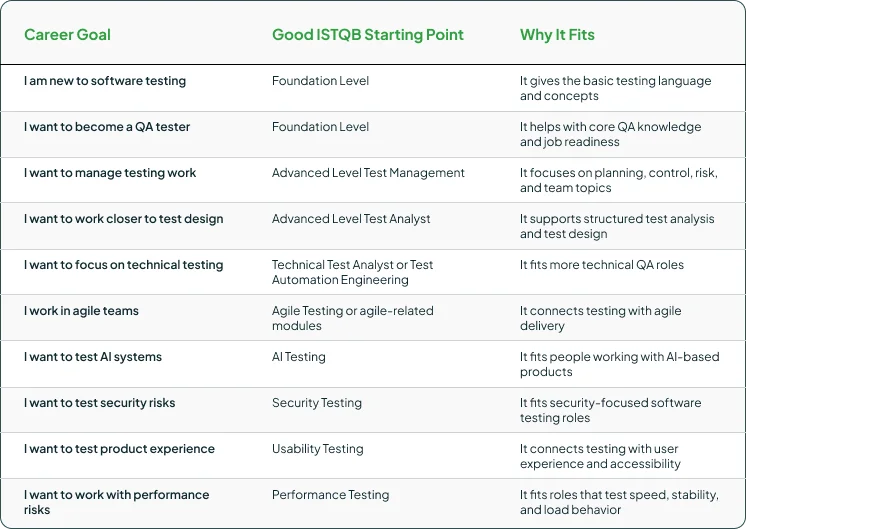
This table gives a simple starting point. The full ISTQB board page on BilduX can help you compare all certification options by level, topic, and course format.
How Should You Prepare for ISTQB?
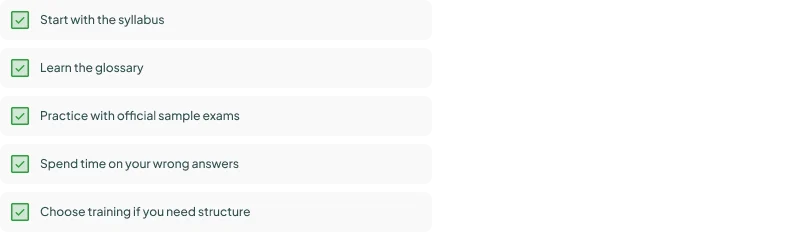
Preparing for ISTQB feels much easier when you follow a simple plan. You do not need to study everything at once. Work through the main material step by step, then check where you still feel unsure.
Online, Onsite, or Inhouse ISTQB Training?
The right ISTQB training format depends on how you like to learn, how much time you have, and whether you are booking for yourself or for a team.
Online training is a good choice when your schedule is full or travel would be a problem. You join from home, from work, or from another city. This works well for people who want more freedom and prefer to learn without losing time on the road.
Onsite training fits better when you like learning in a classroom. You meet the trainer, ask questions in the moment, and hear what other learners think. Some people find this easier because the whole day is focused on the course, without the usual work distractions.
Inhouse training makes sense for companies. A whole team learns the same testing terms, the same quality ideas, and the same way of thinking about QA. The training also feels closer to daily work because examples often come from the team’s own projects.
BilduX helps you compare ISTQB training options by board, course, format, and provider. This way, you choose the course which fits your goal, not the one with the best-sounding title.
Common Questions About ISTQB Certification
What is ISTQB certification?
ISTQB certification is a well-known certification path for software testing. It shows your knowledge of testing terms, testing methods, test processes, and quality topics.
Is ISTQB Foundation Level good for beginners?
Yes. Foundation Level is the normal starting point for new testers. It also works well for people who want a clear base in QA and software testing.
Is ISTQB certification enough to get a QA job?
No, not on its own.
ISTQB helps your CV, mainly when you apply for junior QA roles or jobs where employers ask for ISTQB. Still, companies also look for hands-on testing skills, clear bug reports, basic tool knowledge, software basics, and good communication.
Is the ISTQB Foundation exam hard?
It is an entry-level exam, but it still needs preparation.
You should study the syllabus, learn the glossary, and use official sample exams. The wording can be exact, so understanding the concepts is better than memorizing answers.
Which ISTQB certification should I take after Foundation?
Your next step depends on your goal.
For test leadership or planning, Test Management is a good choice. For more technical work, Technical Test Analyst or Test Automation Engineering might fit better. If you work in a focused area, you might prefer a Specialist certification, such as AI Testing, Security Testing, Performance Testing, or Usability Testing.
Does ISTQB certification expire?
Foundation Level, Specialist, and Advanced Level certificates are valid for life. Expert Level certificates are valid for 7 years.