IT professionals face more certification choices than ever.
Software architecture, cybersecurity, software testing, business analysis, project management, cloud computing, AI, and agile delivery each have their own learning paths. For anyone who wants to grow their career, the hard part is rarely finding a course. The hard part is choosing the right one.
Many people begin with the wrong question.
They ask, “Which certification is best?”
A better question is, “Which certification moves me closer to my next career goal?”
Your answer depends on your current role, your experience, your industry, and where you want to go next.
This guide walks you through a simple way to compare IT certification courses step by step, before you spend your time and money.
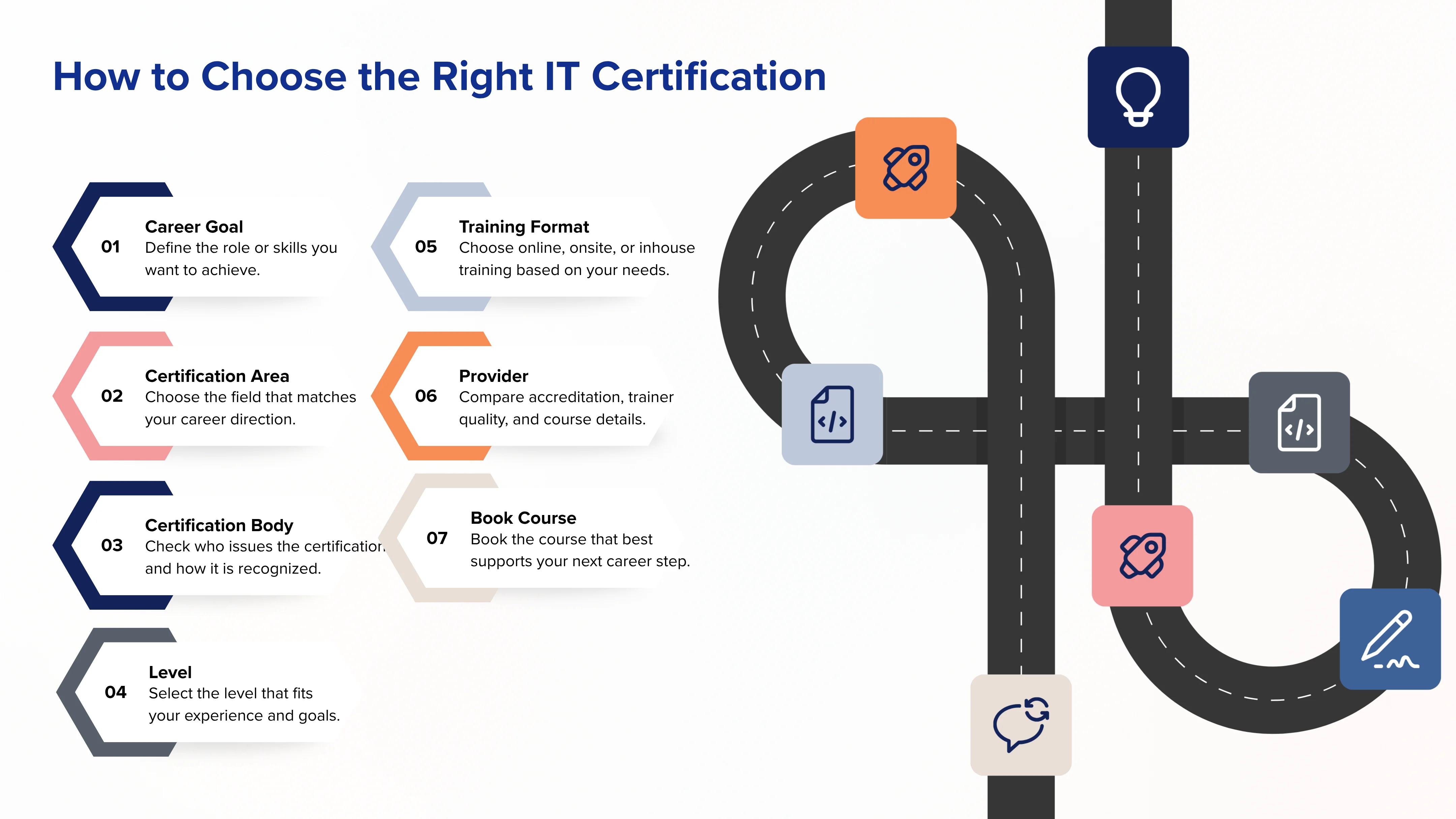
1- Start With Your Career Goal, Not the Certification
Many people pick a certification because they see others talk about it. That often leads to the wrong choice.
A certification should help you reach a clear career goal. First decide where you want to go, then choose the training that fits.
Ask Yourself What You Want to Achieve
Do you want to move from developer to software architect?
Do you want to become a software tester?
Do you want to enter cybersecurity?
Do you want to improve your project management skills?
Do you want to learn requirements engineering?
Do you want to move into business analysis?
Do you want to build stronger skills in user experience?
The same certification might help one person and bring little value to another. Your goal decides what makes sense.
Example
A software developer who wants to become an architect often gains more from architecture-focused certifications than from testing certifications.
Someone in quality assurance will often get more value from testing-related credentials.
Before you compare courses, define your destination.
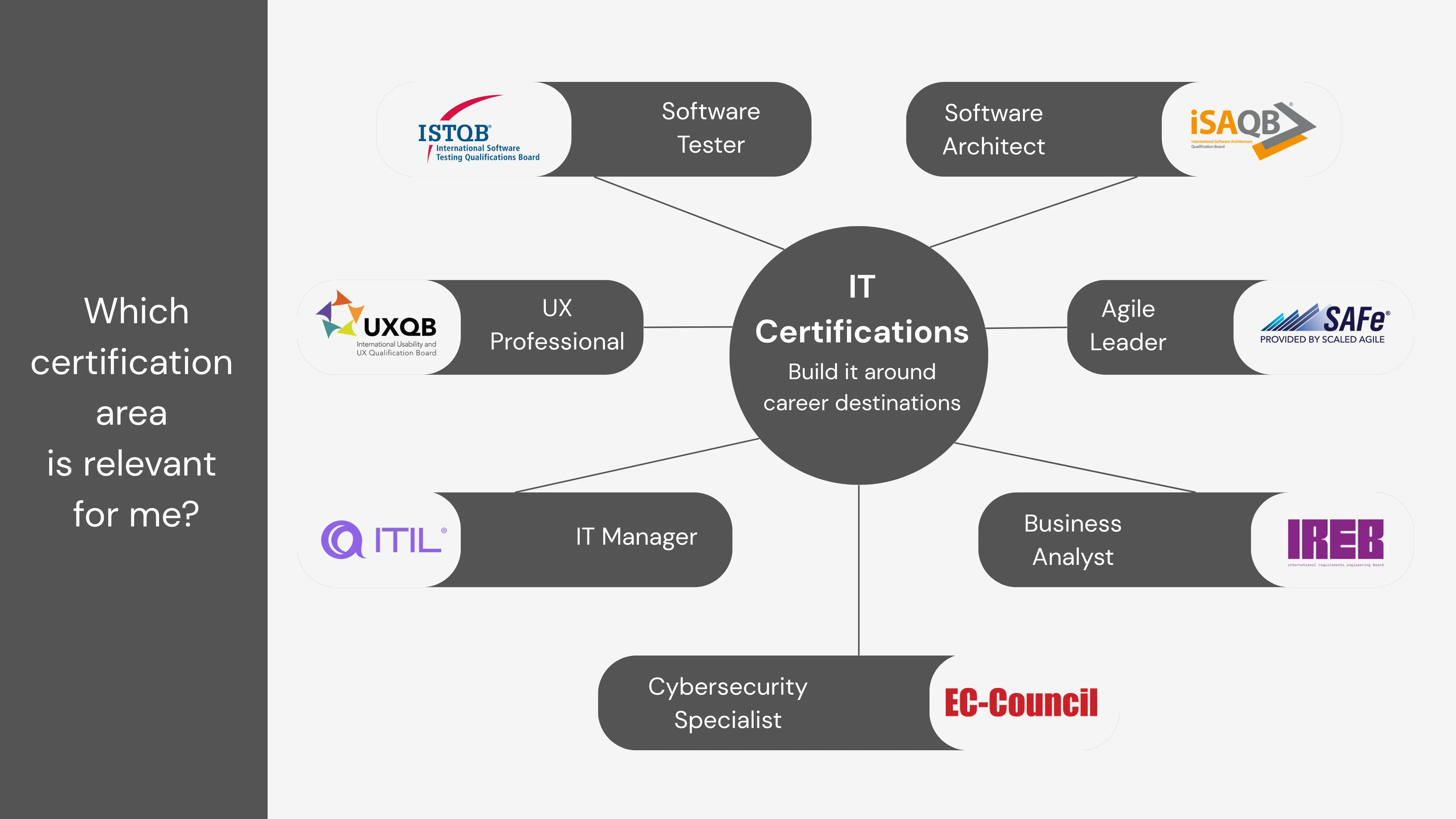
2- Choose the Right Certification Area
Once your goal is clear, choose a certification area matching your role, daily tasks, and next career step.
Software Architecture
Best for:
Developers
Technical leads
Software architects
Typical certification path:
Software Testing
Best for:
Testers
QA engineers
Test managers
Typical certification paths:
Business Analysis and Requirements Engineering
Best for:
Business analysts
Product professionals
Requirements engineers
Typical certification path:
User Experience
Best for:
UX professionals
Designers
Product teams
Typical certification path:
Cybersecurity
Best for:
Security specialists
System administrators
Security managers
Typical certification path:
Project and Service Management
Best for:
Project managers
Team leads
IT managers
Typical certification paths:
3- Understand the Certification Body
Different organizations create different certifications, so the provider matters.
The certification body sets the rules for:
Curriculum
Exam standards
Global recognition
Renewal requirements
Questions to Ask
Do employers in your field know and respect this certification?
Is the certification international?
Is it vendor-neutral or tied to one company?
Do job posts often ask for it?
Does it offer a clear next step after you pass?
A trusted certification body gives the credential stronger long-term value.
4- Know the Certification Path Before You Pick a Level
Many certification systems use levels like Foundation, Advanced, or Expert. These names do not always show how much experience you need.
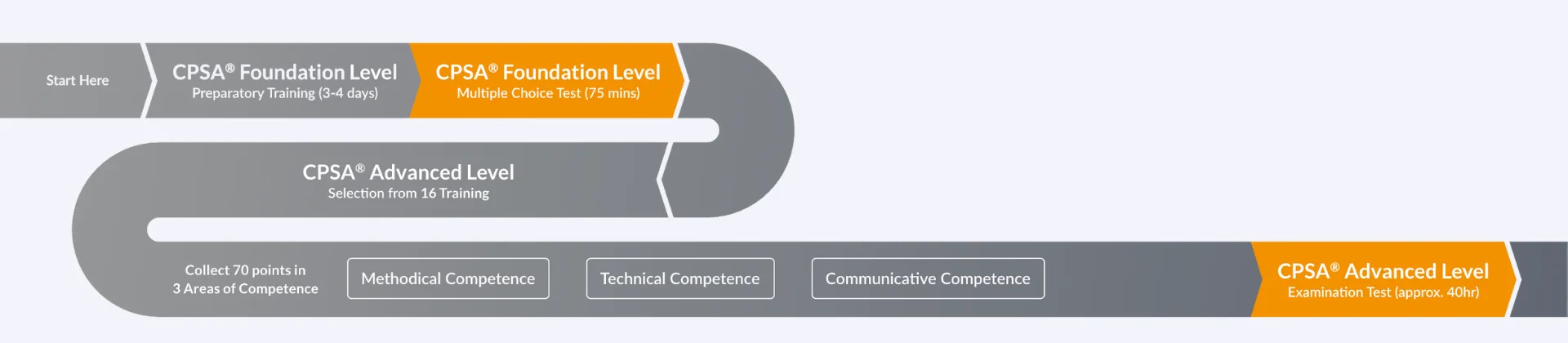
Foundation does not always mean beginner level. In many systems, Foundation gives you the first official step. You learn the terms, key ideas, and structure used across the full certification path.
After Foundation, your main question should be:
Which path fits my career goal?
Foundation Often Comes First
Foundation certifications give everyone the same base.
They suit professionals who start a certification path, career changers, teams who need the same language, and learners who want to prepare for advanced certifications.
Pick Your Next Step Based on Your Goal
After Foundation, learners should not choose the next certification only because it sounds more advanced.
They should ask:
Do I want to specialize in a technical area?
Do I want to move into leadership?
Do I need a role-based certification?
Do I need broader strategic knowledge?
Which certification is required before the next level?
Choose the Next Step Based on Your Career Goal
After Foundation, different paths open depending on the certification system.
Before you pick your next certification, ask yourself:
Do I want to grow my technical skills?
Do I want to move into leadership or management?
Do I need a certification for a specific role?
Which skills matter most for my next career step?
The right path depends on your goals, not on the level name alone.
For detailed certification roadmaps, prerequisites, exam requirements, and learning outcomes, visit the relevant certification board pages on BilduX.
5- Decide Between Online and Onsite Training
No training format works best for everyone.
Your choice depends on how you learn, your schedule, and your work or family plans.
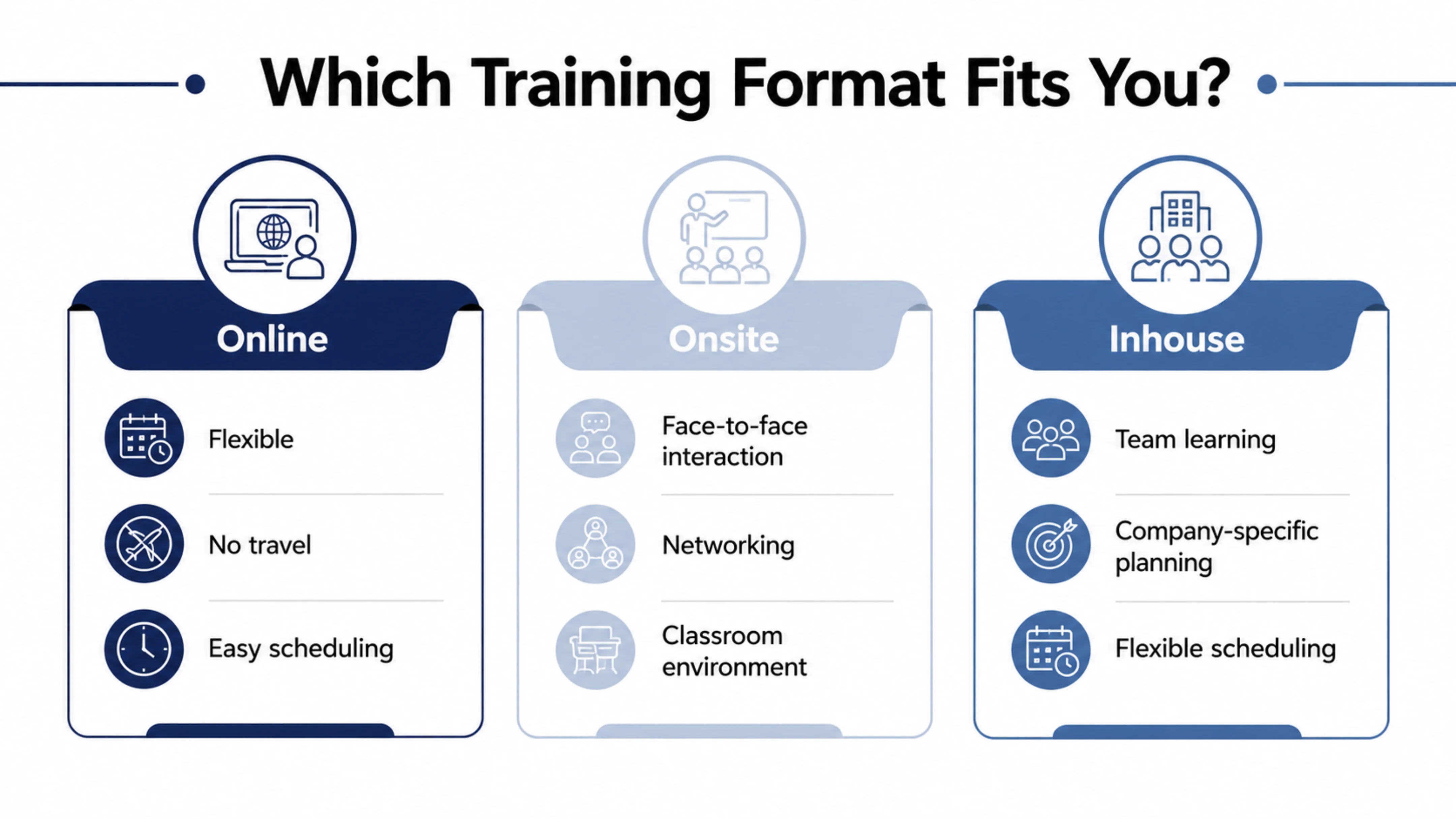
Online Training
Online training fits well when you need more freedom.
You study from any place with a stable internet connection. You also avoid travel time, hotel costs, and long days away from work.
This format often suits people with tight schedules or learners who prefer to study at their own pace.
Onsite Training
Onsite training gives you more direct contact with trainers and other learners.
You ask questions face to face, join group tasks, and build useful contacts. Many people also find fewer distractions when they sit in a classroom instead of learning from home.
This format works well when you like clear structure and personal exchange.
PLUS+ Custom Training for Your Team
When several employees need the same certification, a public course might not fit your team best.
Many training providers offer in-house courses for one company only. The course still follows the official certification curriculum. At the same time, the provider often adjusts the schedule, language, location, and examples to match your team’s daily work.
In-house training works well when:
Several employees need the same certification
The training should match current company projects
Your team wants to learn together
Your organization needs more control over dates and timing
For company-specific needs, compare providers with in-house training options. Check the delivery format, language, location, and scheduling choices before you book.
6- Think About Language and Location
Learning gets harder when the course language feels like extra work.
Questions to Ask
Is the course in your preferred language?
Is the exam in your preferred language?
Is there a training location near you?
Would you rather learn from international trainers or local trainers?
Language, travel time, and trainer style shape how well you learn. Many people only notice these points after the course starts.
7- Compare the Full Price
The cheapest course does not always save you money.
What to Compare
Training price
Exam fee
Training materials
Retake rules
Extra support
Practice exams
A course with a higher price might include support that helps you avoid extra costs later.
8- Make Your Personal Certification Shortlist
At this point, you should have a much clearer idea of which options fit you.
A simple shortlist should include:
Career goal
Certification area
Certification body
Level
Exam format
Provider accreditation
Learning format
Language
Price
This turns a confusing market into a clear comparison.
Common Questions About Choosing an IT Certification
Which IT certification should I take?
Choose the certification that matches your career goal and target role.
What is the best IT certification for beginners?
There is no single best option for everyone. It depends on the field you want to enter. For general IT entry, CompTIA lists Tech+ and A+ as beginner-friendly options, while ISTQB CTFL is suitable for people who need core software testing knowledge.
Why should I choose an accredited training provider?
Accredited training providers are checked against official standards. ISTQB, for example, lists more than 300 accredited training providers worldwide.
Should I choose online, onsite, or inhouse training?
Choose the format that fits your schedule, learning style, and team needs. Official providers such as PeopleCert offer eLearning and official training materials, while many certification programs also support classroom or provider-led training.
How do I know if an IT certification is worth it?
Check whether it supports your career goal, builds relevant skills, and is recognized in your field.
Conclusion
Choosing an IT certification is not about picking the course with the biggest name.
Your choice should match your goals, your current experience, and where you want to go next.
When you compare the certification body, level, training provider, format, language, and cost, the right option becomes easier to spot.
The best certification is not always the one most people pick.
The right one helps you take one meaningful step forward in your career.