A software project might have great developers, sharp testers, and solid tools.
And still, things go wrong before anyone writes a line of code. This often starts with unclear requirements.
The team does not fully know what they need to build.
Stakeholders explain their needs in different ways.
The scope changes again and again.
Acceptance criteria stay too weak.
Business teams and technical teams think they are aiming for the same result, but they picture different outcomes.
That is where IREB CPRE helps.
IREB CPRE gives teams a clear and practical way to work with requirements. People learn how to find, write, check, and manage requirements with a shared language. This makes daily project work easier, especially when several teams need to agree on the same goals.
In this article, you will learn what IREB is, why requirements engineering matters, and how the right IREB training helps you plan your next step. For the full course list, levels, exam details, and training options, you will find everything on the IREB board page on BilduX.
What Is IREB?
IREB stands for International Requirements Engineering Board.
IREB created the CPRE certification scheme. CPRE means Certified Professional for Requirements Engineering. It helps people understand, write, check, manage, and change requirements in a clearer way.
In simple terms, IREB helps teams work better with the question: What should we build, and why?
Why Requirements Engineering Matters
Requirements connect an idea with the work your team plans to do.
When this connection is weak, each next step gets harder. Developers fill in gaps on their own. Testers feel unsure about the result they should check. Product owners struggle to turn ideas into useful backlog items.
Requirements engineering gives teams a clear way to bring needs into the open, check shared understanding, and handle changes before they create extra work.
This work will not remove every project risk. But your team gets better conversations earlier, before small gaps turn into bigger problems.
Who Is IREB Training For?
IREB training suits people who work with needs, scope, product choices, or software quality. You do not need a specific job title. The training helps when your work depends on clear, well-written requirements.
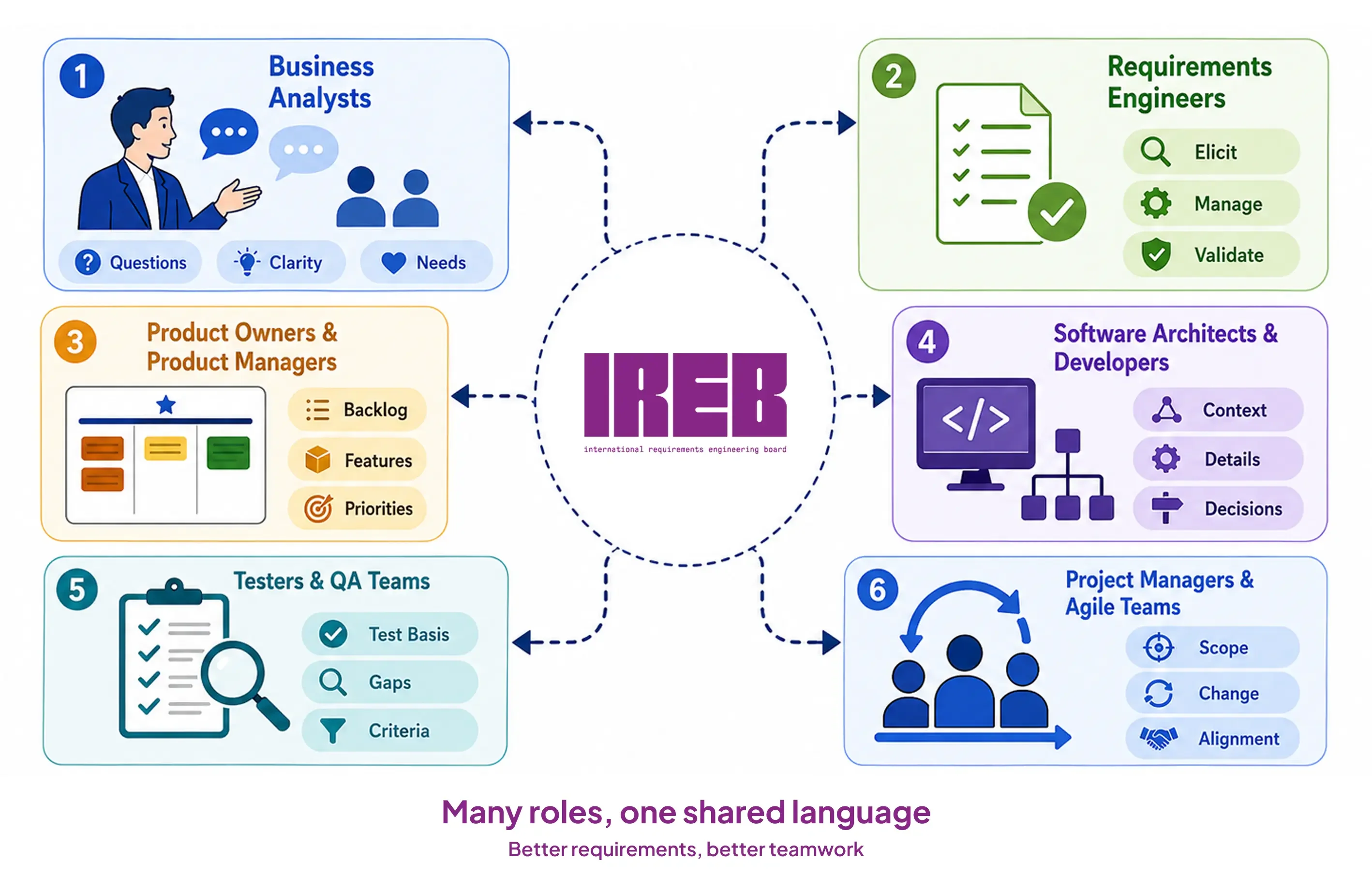
Business Analysts
Business analysts often sit between stakeholders, product teams, and technical teams.
IREB training helps them ask sharper questions, clear up unclear needs, and write requirements in a way others understand and use.
Requirements Engineers
Requirements engineers are the main audience for IREB training. They work with gathering, writing, checking, managing, and changing requirements.
The training gives them a more structured way to handle this work.
Product Owners and Product Managers
Product owners and product managers turn customer needs into backlog items, features, and priorities.
IREB training helps them explain product choices with more clarity and make requirements easier to refine, discuss, and test.
Software Architects and Developers
Architects and developers need clear requirements before they make technical choices.
IREB training helps them understand where requirements come from, what details matter, and which questions to ask before making assumptions.
Testers and QA Teams
Testers need clear requirements to know what to test and what result to expect.
IREB training helps QA teams spot gaps, check acceptance criteria, and connect requirements with test cases. This also makes the link between IREB and ISTQB easy to see.
Project Managers and Agile Teams
Project managers and agile teams need a shared view of scope, change, risk, and stakeholder needs.
IREB training helps when requirements sit across different people, teams, tools, and meetings. It brings more clarity into daily work and helps teams move with fewer misunderstandings.
How the IREB Certification Path Works
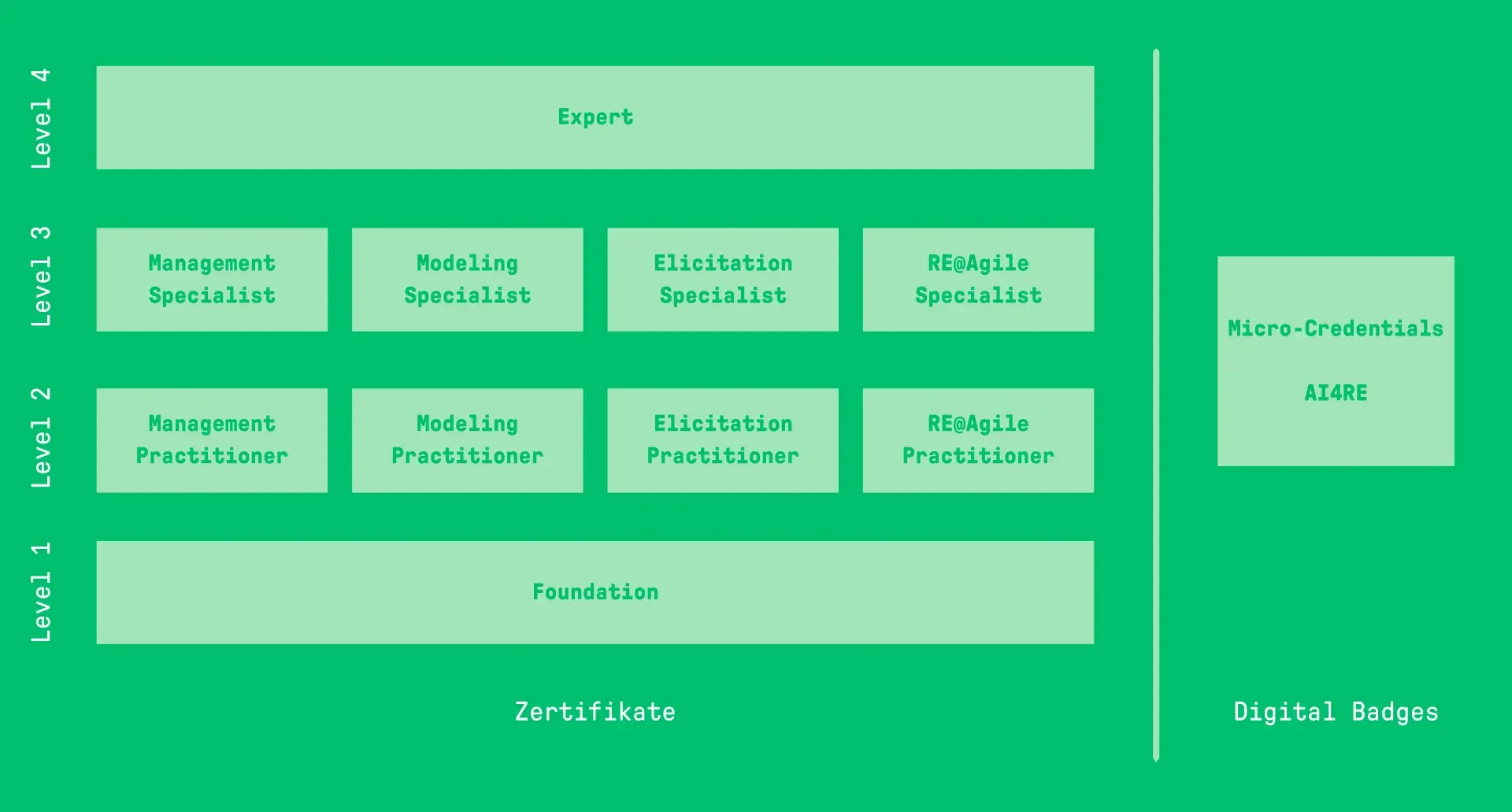
The CPRE path has several levels.
Your main task is to pick the level that matches your current knowledge and your next goal.
Foundation Level
Foundation Level is the first step.
You learn the basics of requirements engineering. You also build a shared language with your team, which makes daily work easier.
This level suits you when you are new to requirements engineering or want a clear base.
Training helps you learn key terms, methods, and examples faster.
Practitioner Level
Practitioner Level takes you deeper into one topic.
The main modules are:
This level suits you when you already know the basics and want to improve one part of your requirements work.
Specialist Level
Specialist Level shows stronger skills in one chosen topic.
The topics follow the same areas as Practitioner Level, such as Elicitation, Management, Modeling, and RE@Agile.
This level is not the first choice for most beginners. You should choose Specialist Level when you want to show advanced knowledge and hands-on skill.
Expert Level
Expert Level is the highest CPRE level.
This level suits senior requirements engineering professionals. You work with this level when you advise teams, coach people, teach others, or improve requirements work inside organizations.
You need strong knowledge and real project experience.
H3: Micro-Credentials and Agile Primer
IREB also offers shorter learning options.
AI4RE focuses on AI in requirements engineering.
Agile Primer helps you learn the basics of agile work.
Micro-credentials are shorter and more focused than the full CPRE levels.
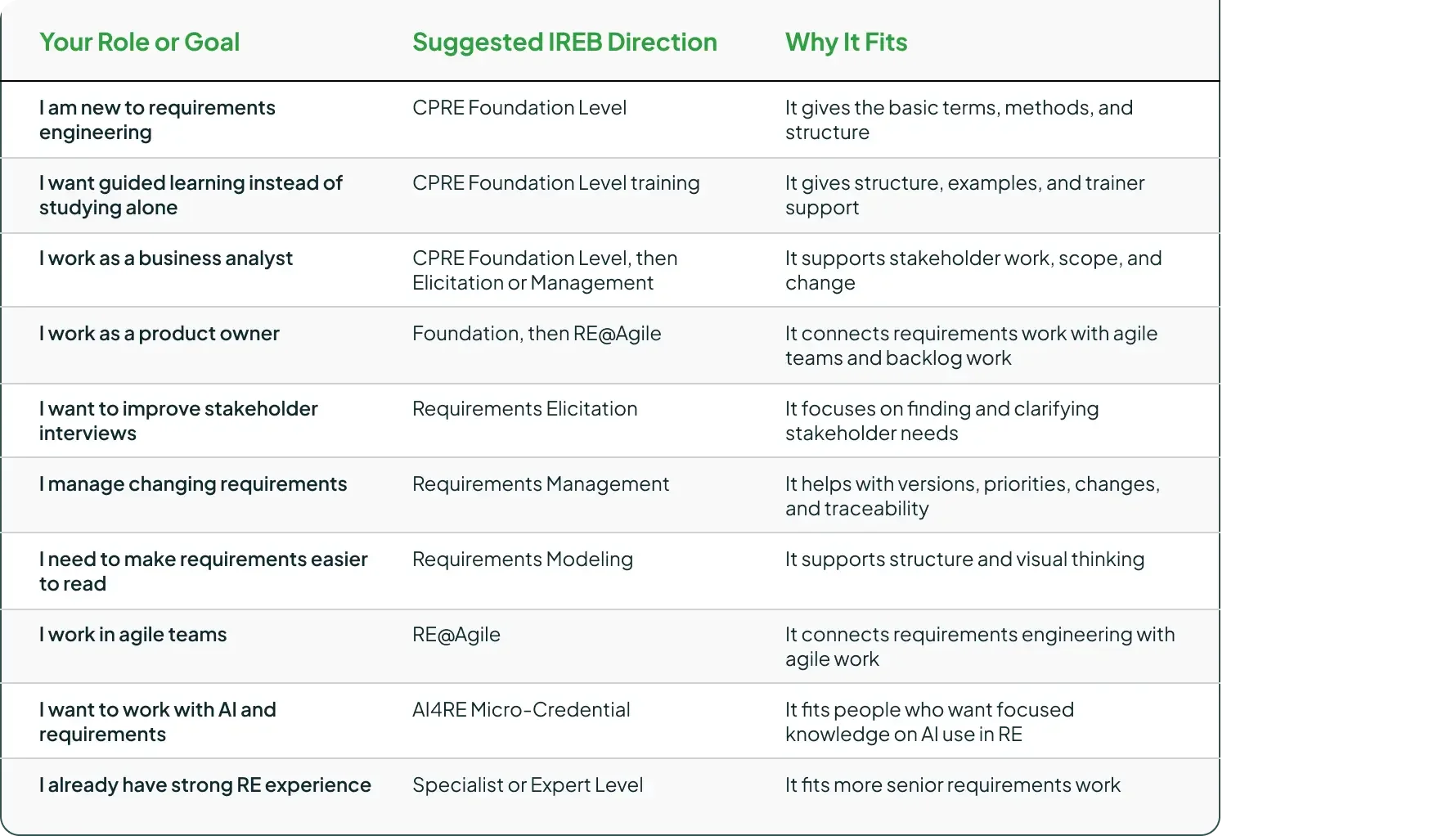
Which IREB Course Fits Your Role?
Is IREB Certification Worth It?
IREB certification is worth a closer look when requirements play a role in your daily work.
This includes business analysis, product work, testing, architecture, development, and project delivery.
The value goes beyond the certificate. You learn how to handle problems many teams face every week: unclear requests, broad user stories, late changes, missing details, and meetings where people leave with different ideas of the same decision.
IREB also supports career growth in business analysis and requirements roles. Still, no certificate replaces real project experience. You need practice, stakeholder contact, and sound judgment.
IREB brings less value when your role has no link to requirements, scope, users, or product decisions.
You get the most value from IREB when your work depends on understanding what the team should build before the team starts building.
Why IREB Training Helps
You are able to prepare for IREB on your own.
But requirements engineering is often hard to learn from documents only.
In training, abstract terms turn into real project cases. A trainer shows why a requirement is too vague, which follow-up questions work better, and how to turn broad needs into input a team understands.
You also ask questions, compare examples with other learners, and see how different roles view the same requirement.
This matters because requirements work is more than writing. You listen, check, discuss, and make decisions clear.
Self-study works well when you already know the topic and plan your own learning with care.
Training fits better when you want structure, examples, feedback, and a clear path through the syllabus.
Online, Onsite, or Inhouse IREB Training
BilduX helps you compare IREB training options by format, course, and provider.
Online training works well when you need a flexible schedule, live in another city, or prefer learning from home.
Onsite training suits you when you learn better in a classroom. You get direct contact with the trainer and other learners.
Inhouse training suits teams. Business, product, testing, development, and project teams learn the same requirements language and work from the same base.
The right format depends on your learning style, your schedule, and your team’s goals.
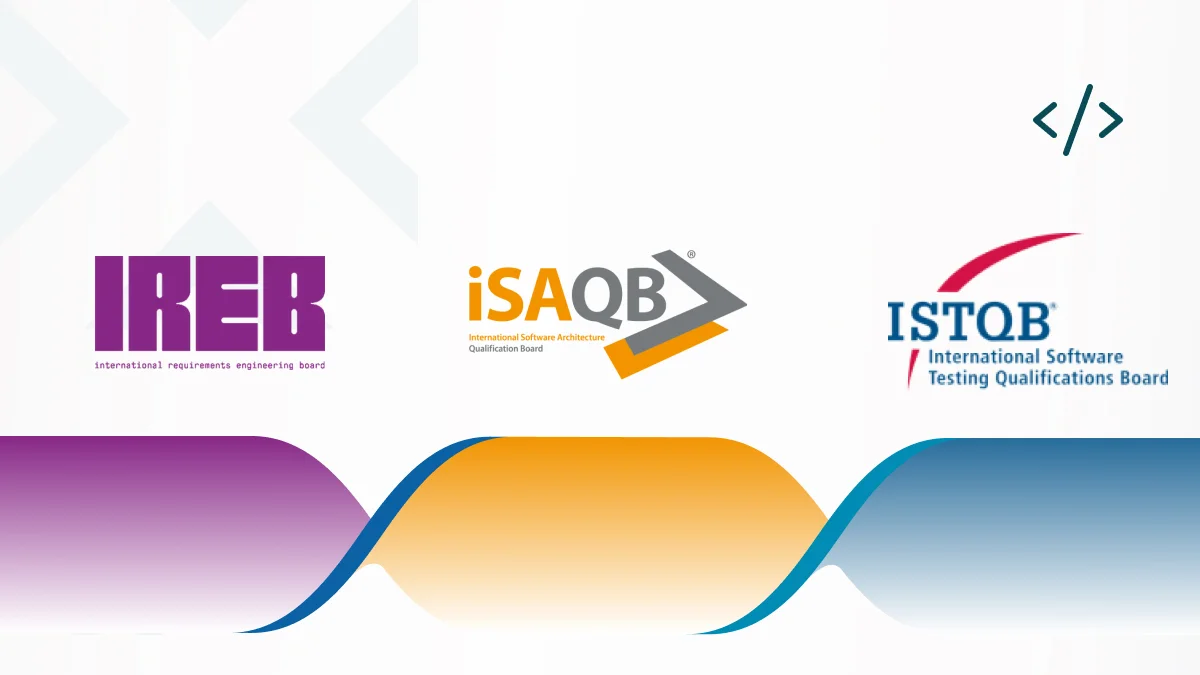
IREB, ISTQB, or iSAQB: What Is the Difference?
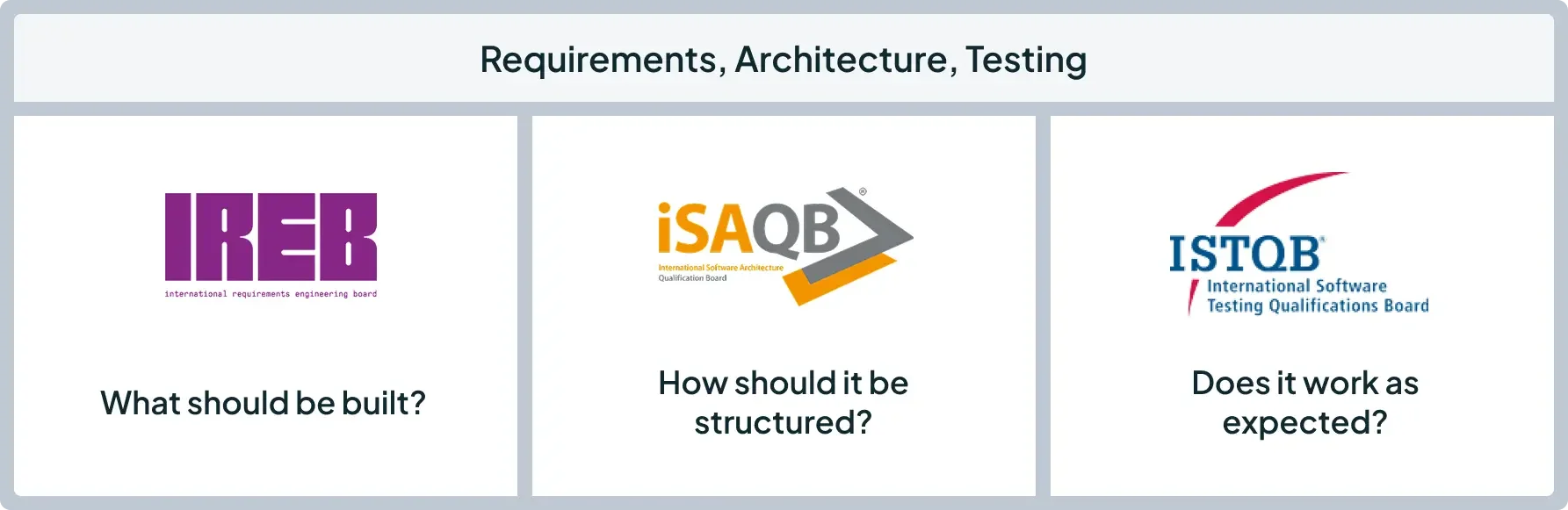
IREB, ISTQB, and iSAQB all support software projects. Each one focuses on a different part of the work.
IREB
IREB focuses on requirements engineering.
Teams use IREB to understand what the product needs to do and why users need those features. This helps before planning the solution in detail.
ISTQB
ISTQB focuses on software testing.
Teams use ISTQB to build a shared testing language. They check whether the product works as planned and whether quality risks are clear.
iSAQB
iSAQB focuses on software architecture.
Teams use iSAQB to design the structure of a software system. This includes technical choices, quality goals, and the way teams build the system.
These three areas often work together in the same project.
Requirements define the goal. Architecture shapes the solution. Testing checks the result.
IREB or Business Analysis Training?
IREB is useful for business analysts, but it is not only a business analysis certification.
Business analysis can cover many areas, such as strategy, processes, stakeholder work, change, and business value.
IREB focuses more clearly on requirements work. This includes elicitation, documentation, validation, management, and change.
Choose IREB training if your main problem is unclear requirements, weak scope, or poor communication between business and technical teams.
How Does the IREB Exam Work?
CPRE exams are based on the syllabus and handbook.
The exam uses multiple-choice questions and is taken through recognized certifiers.
Detailed exam rules can change by level and module, so check the current rules before booking.
CPRE certificates have lifelong validity. Micro-credentials have limited validity, so check the official IREB page for the current credential rules.
How Should You Prepare for the CPRE Foundation Exam?
Preparing for the CPRE Foundation Exam feels much easier when you follow a clear plan. Start with the syllabus, because this gives you the main topics you need to study.
A training course also helps if you like structure. You follow the exam content step by step and get difficult terms explained in a simpler way.
Use the handbook when you need more detail. The handbook gives you extra context, examples, and a better feel for how requirements engineering works in practice.
Spend enough time on the glossary too. CPRE uses specific terms, and the glossary helps you understand what each term means in the exam.
After studying the main topics, take the practice exam. The questions show you the exam style and help you spot the areas where you still need work.
Then review your weak topics. Look at every wrong answer and check why you made the mistake. This helps you study with more focus.,
Near the end, use the online self-assessment as a final check. This gives you a good idea of how ready you are before exam day.
Common Questions About IREB
1- Why should I take IREB training instead of only studying alone?
Self-study can work, but training gives you a clearer route.
You can ask questions, work with real project examples, and understand the syllabus faster. This is helpful when the topic is new or when you want to connect the theory with daily work.
2- How long does CPRE preparation take?
It depends on your prior knowledge and how you learn.
Training gives you a fixed schedule and a clear plan. Self-study can take more or less time, depending on how much experience you already have with requirements.
3- Which IREB module should I take after Foundation?
Choose the next module based on your role.
Elicitation fits stakeholder work and interviews. Management fits change, versions, and traceability. Modeling helps when requirements need more structure. RE@Agile fits people who work in agile teams.
4- Is IREB useful for business analysts?
Yes, especially when your work includes requirements, scope, stakeholders, and communication between business and technical teams.
IREB can help business analysts work with needs in a more structured way.
5- What is the difference between IREB and ISTQB?
IREB focuses on requirements.
ISTQB focuses on testing.
They support different parts of the same project. IREB helps clarify what should be built. ISTQB helps check whether the result works as expected.
6- What is the difference between IREB and iSAQB?
IREB focuses on what should be built.
iSAQB focuses on how software systems are designed and structured.
They can work well together. IREB helps define the goal, and iSAQB helps shape the technical solution.